The Emily Wall: By Emily Kame Kngwarreye
Overview
Measuring five metres high and fifteen metres wide, The Emily Wall is a monumental composition completed in 1995. Fifty-three acrylic panels come together as one work, expressing the blossoms, landscapes and rhythms of Utopia with extraordinary force.
A dominant central canvas anchors the arrangement. A diptych and fifty surrounding panels create movement across the wall, each carrying Emily’s layered marks while contributing to a larger, unified field.
The work has travelled to exhibitions in Europe and Japan and remains a defining statement within Emily Kame Kngwarreye’s legacy—an immersive meeting of land, life, colour and memory.
Behind the Scenes: The Creation of 'The Emily Wall'


'The Concept'
Written by Hank Ebes (2009)
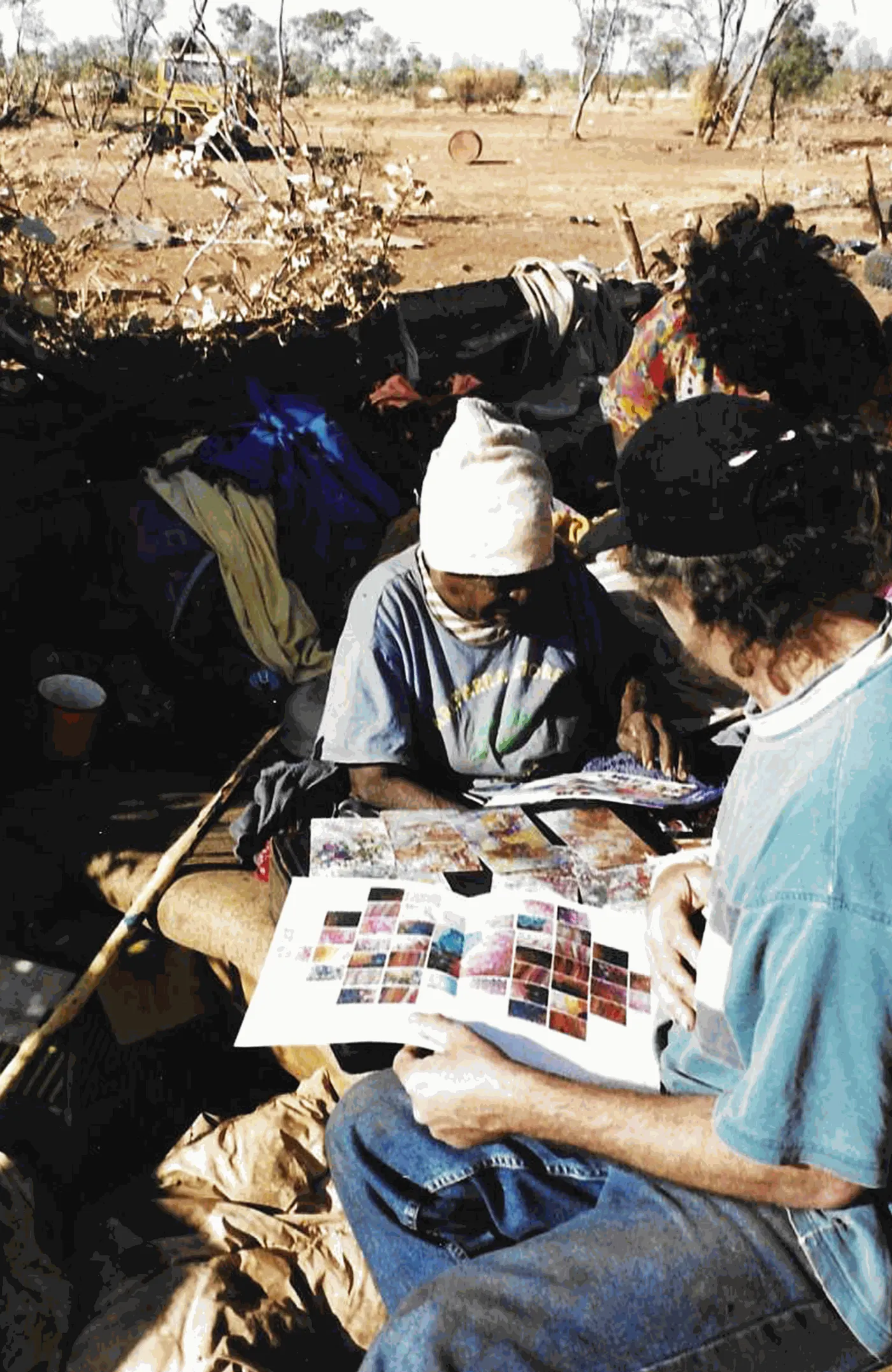
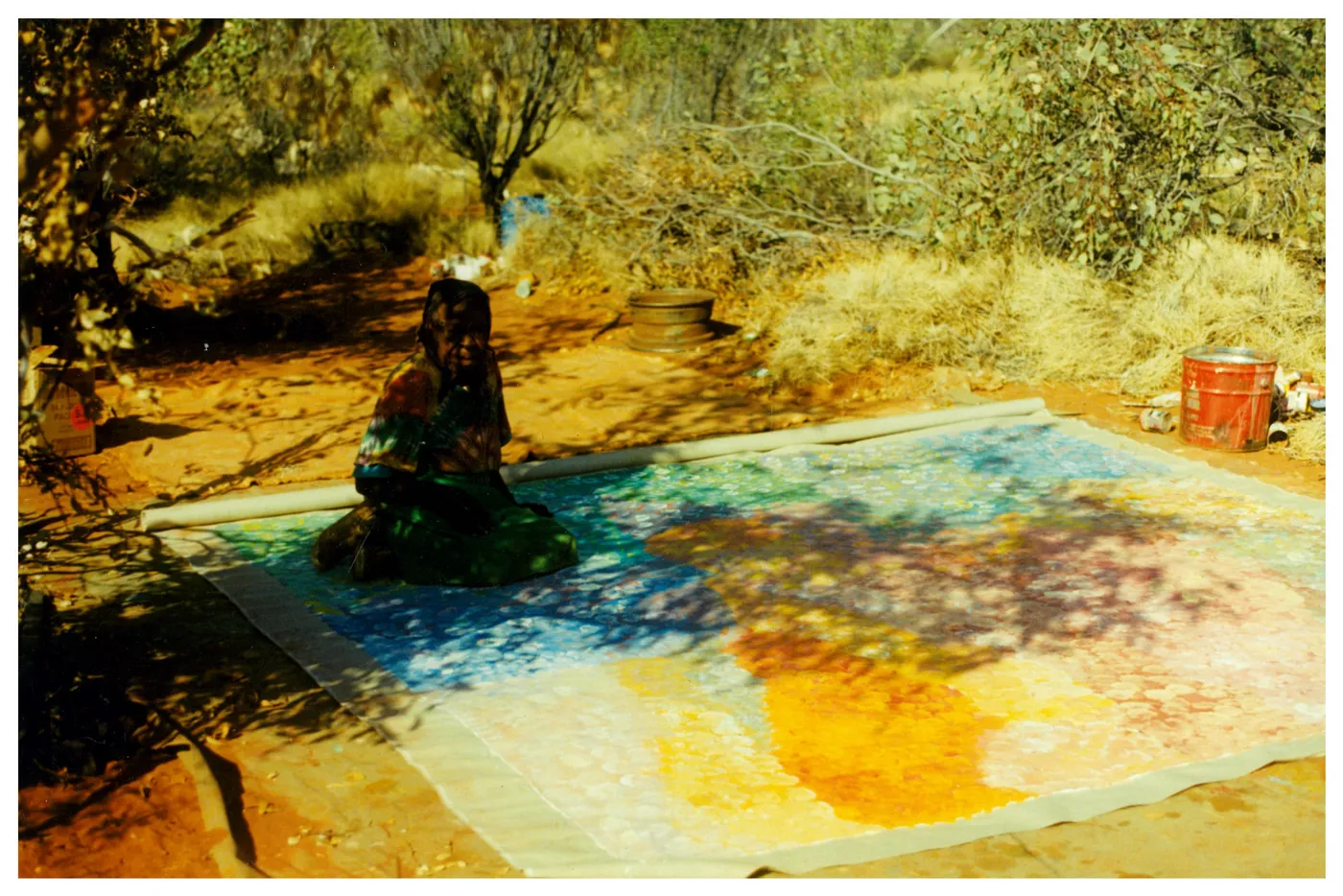
The idea began during a visit to Utopia: to make a work large enough to surround the viewer and to let Emily’s Country unfold as a single continuous presence. Individual canvases would remain complete paintings, yet together they would form something far greater.
Emily worked instinctively, responding to colour and movement rather than a fixed diagram. The central canvases established the rhythm, and the surrounding panels grew around them until the wall carried the seasonal energy and changing light of the desert.
What emerged was not a conventional mural but an environment: a field of paintings that could travel, be installed again, and still retain the intimacy of marks made by hand. Its scale gives the viewer no single vantage point; the eye moves continually from detail to whole.
The Emily Wall endures because it combines ambition with directness. Every panel is alive on its own, while the complete arrangement conveys the breadth of Emily’s imagination and her profound relationship with Country.
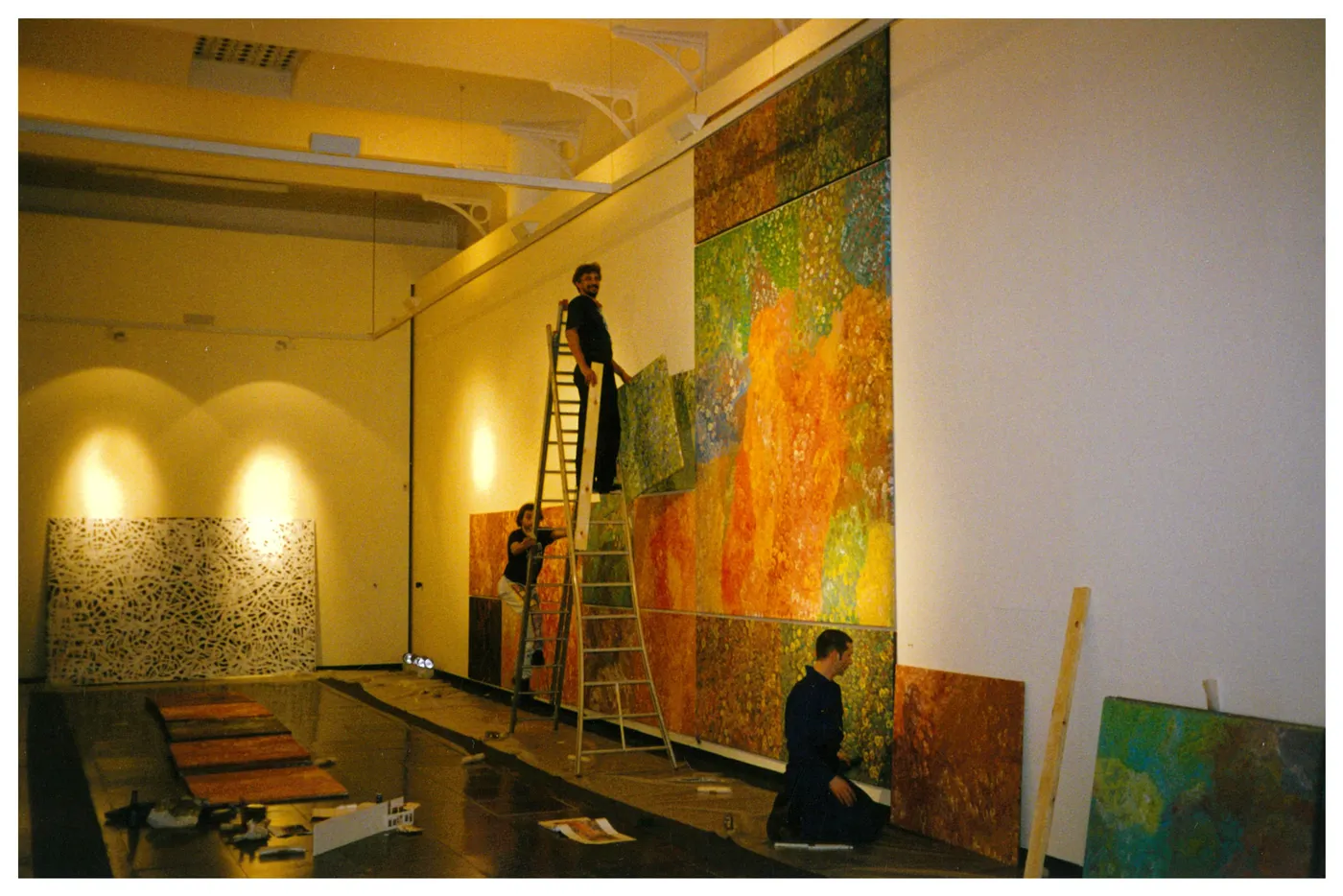
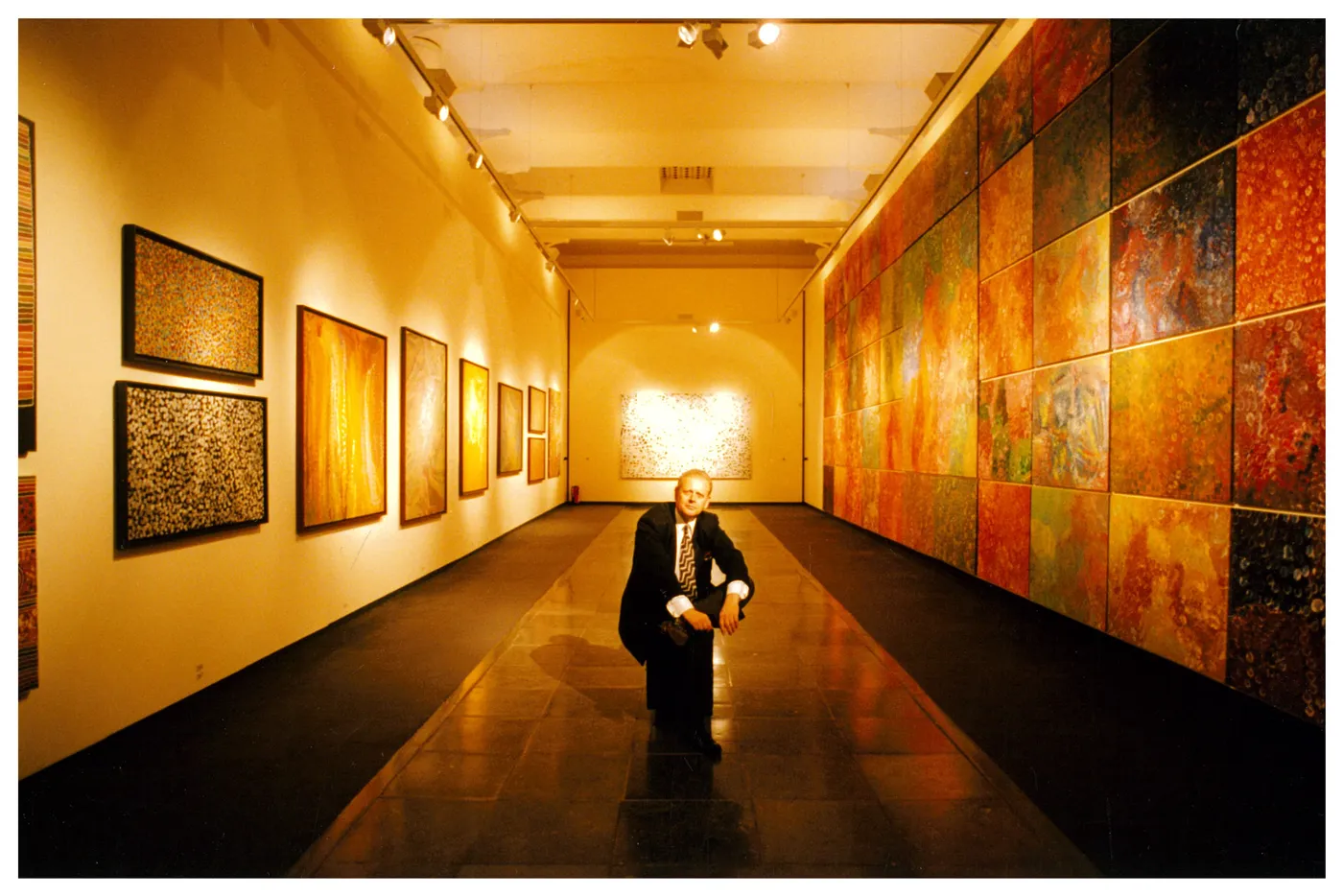
Installation of 'The Emily Wall': NANGARA (1996)

Exhibitions Featuring: 'The Emily Wall'

NANGARA: The Australian Aboriginal Art Exhibition
From The Ebes Collection
In 1996, NANGARA brought together hundreds of works in Bruges for a landmark international presentation of Aboriginal art.
Read more
Emily in Amsterdam: Oude Kerk, Amsterdam
From The Ebes Collection
The 1999 exhibition placed Emily’s work within the historic Oude Kerk and introduced the collection to a major European audience.
Read more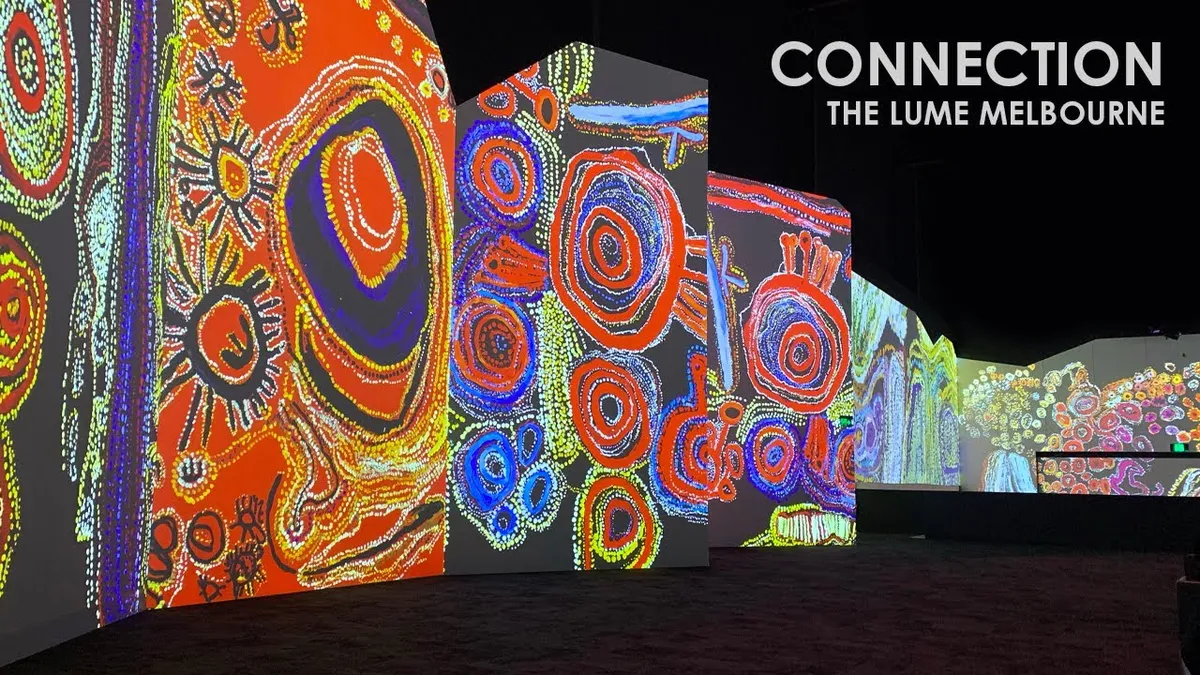
The Lume: Connection
A Collaboration with Grande Experiences
Connection presented First Nations art at an immersive scale, including works by Emily Kame Kngwarreye from the collection.
Read more